

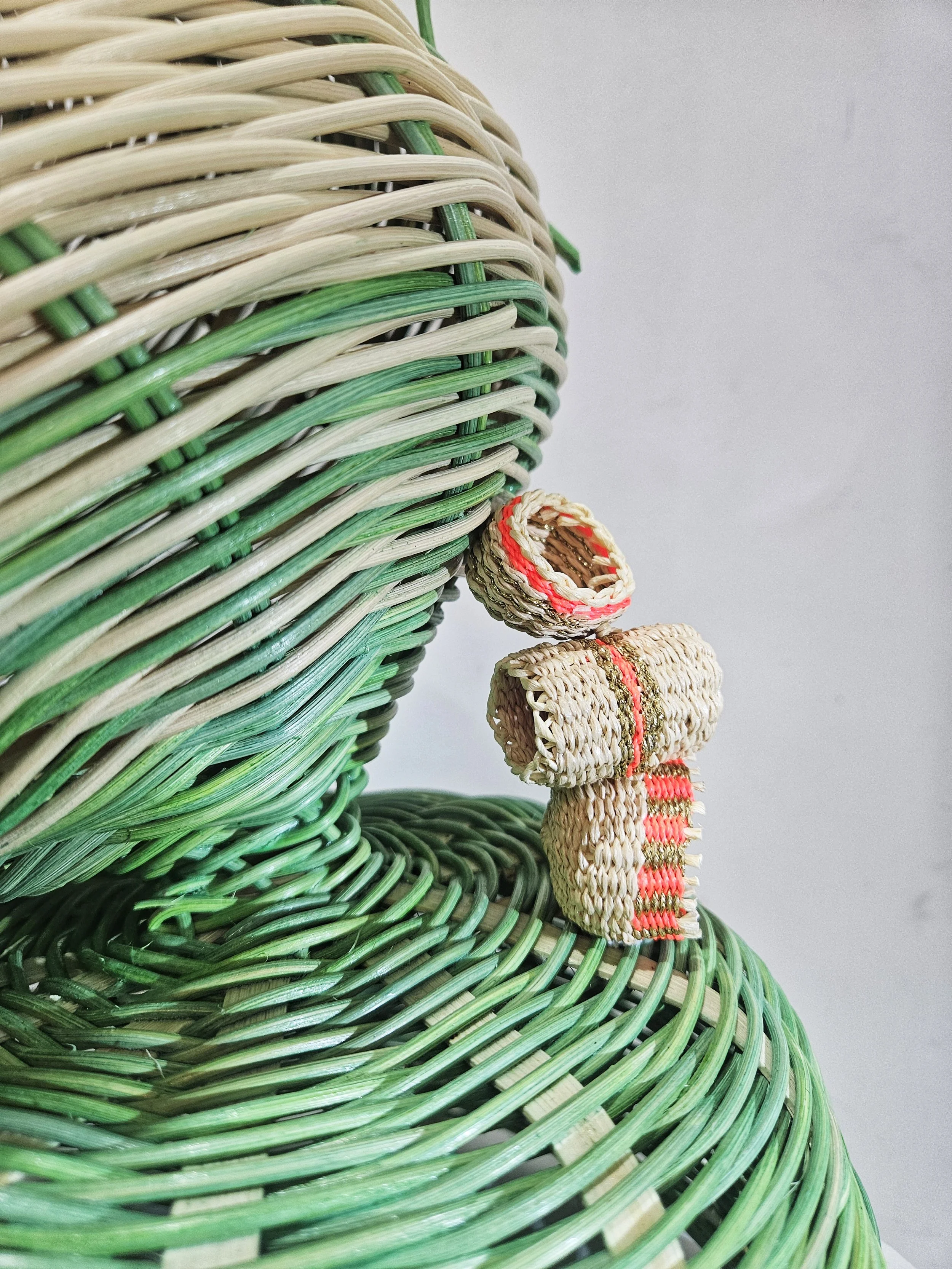
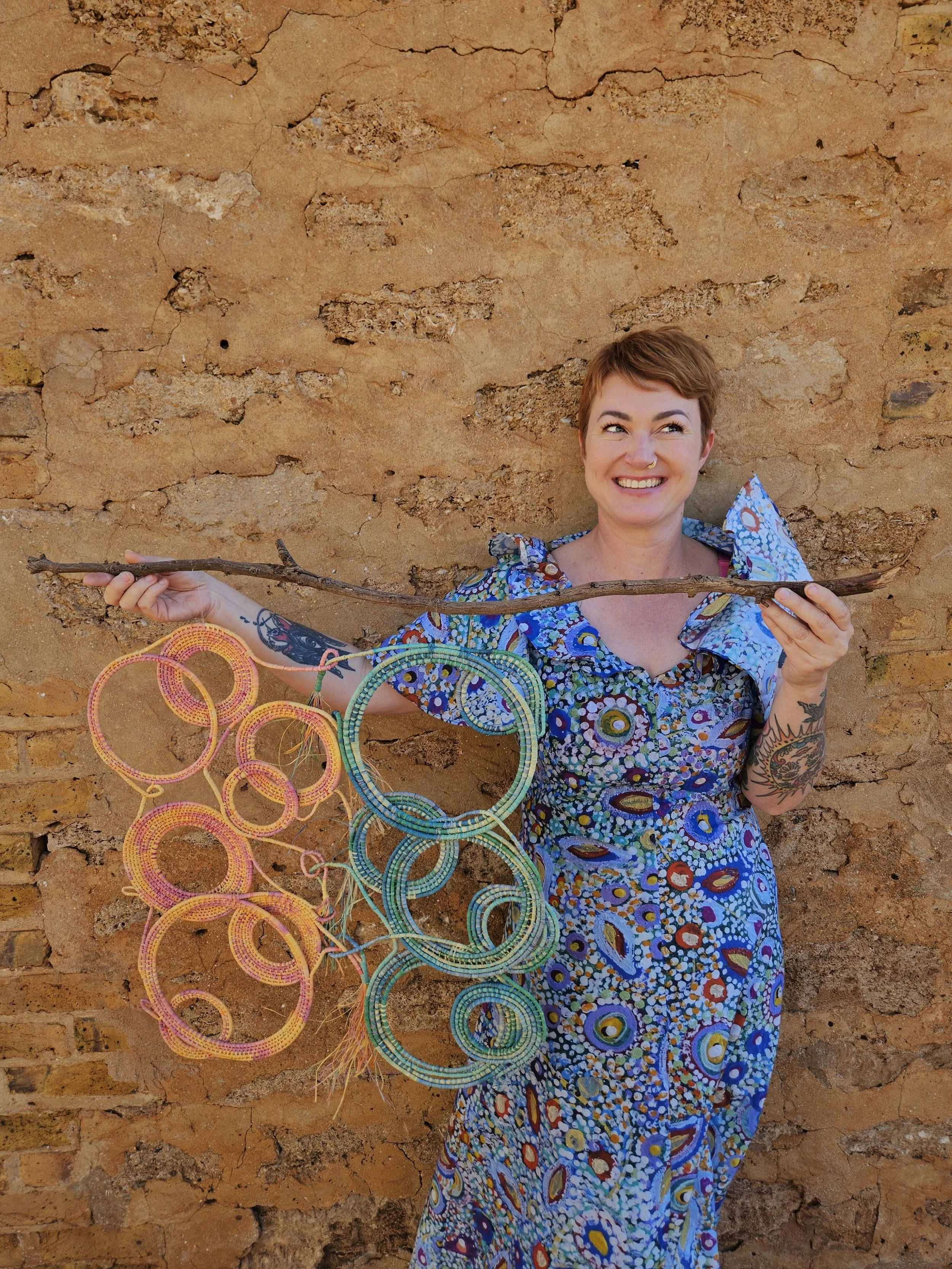
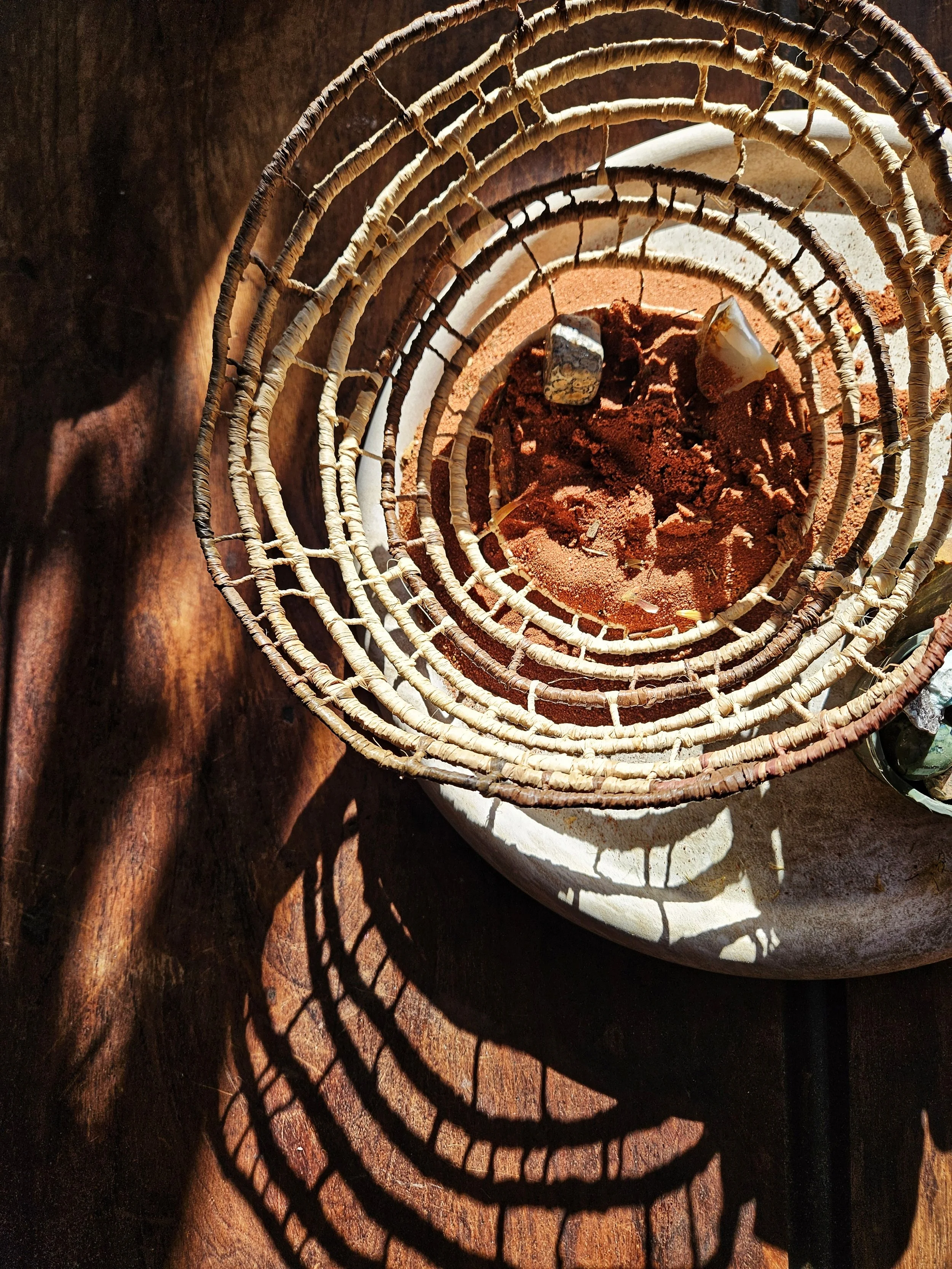
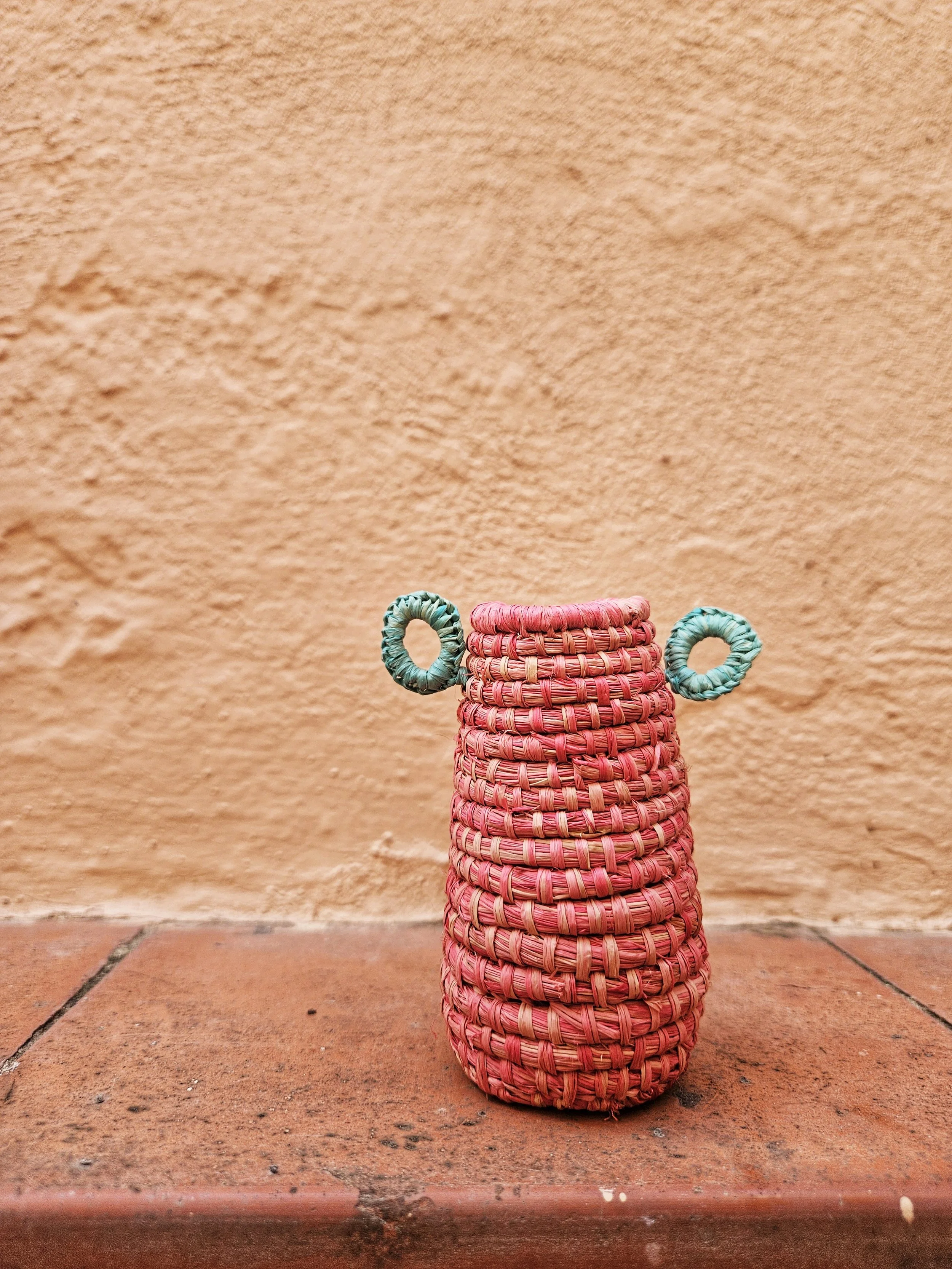
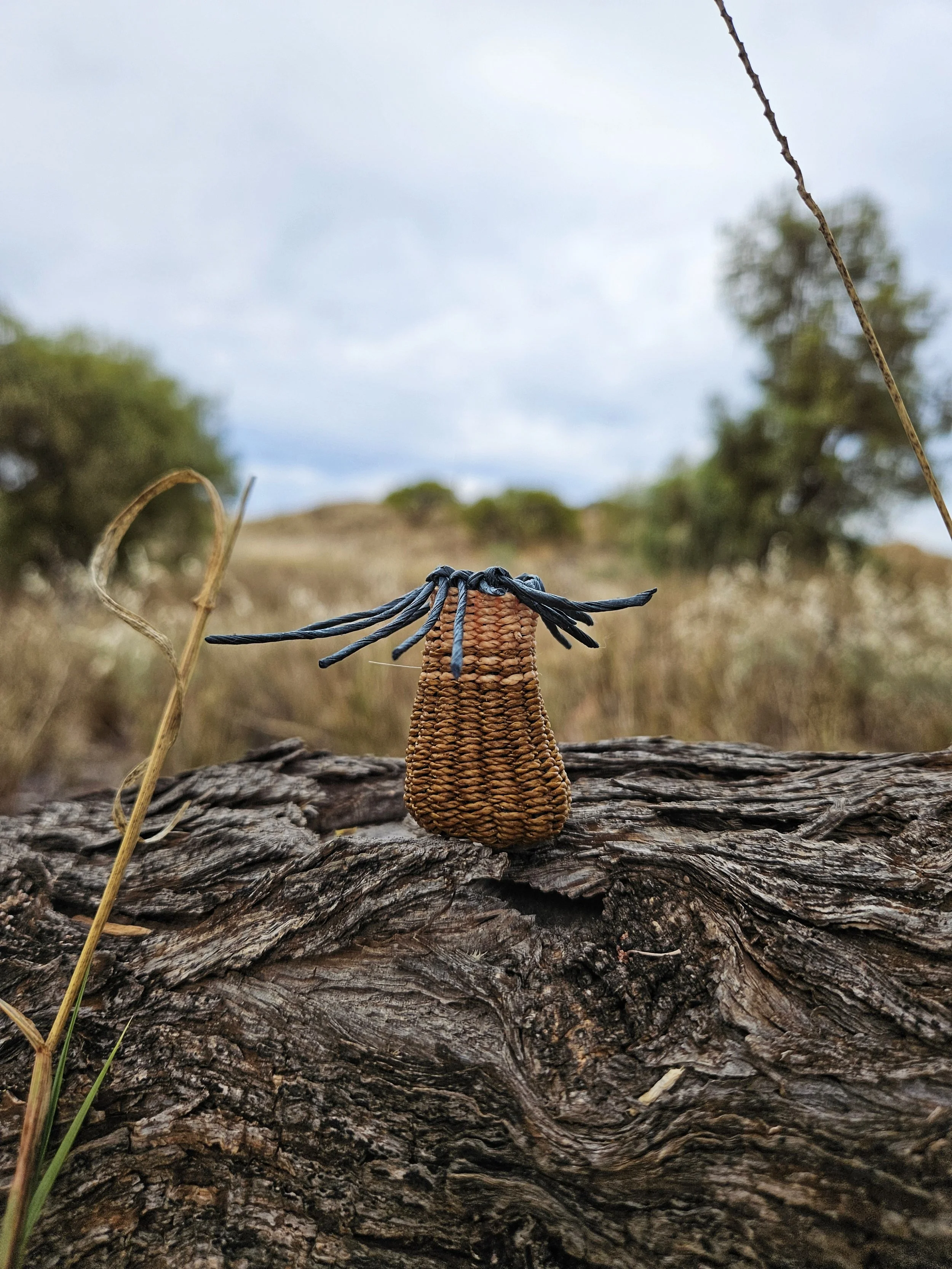
Some of Monique’s weaving work
Monique, tell us about your practice!
I first learned to weave at an ancestral skills camp around three years ago, and it resonated with me on a deep level. It has become my medicine, my teacher, and my friend. I feel most myself when I am weaving. Even after a full day in the studio, when I get home I will weave to unwind!
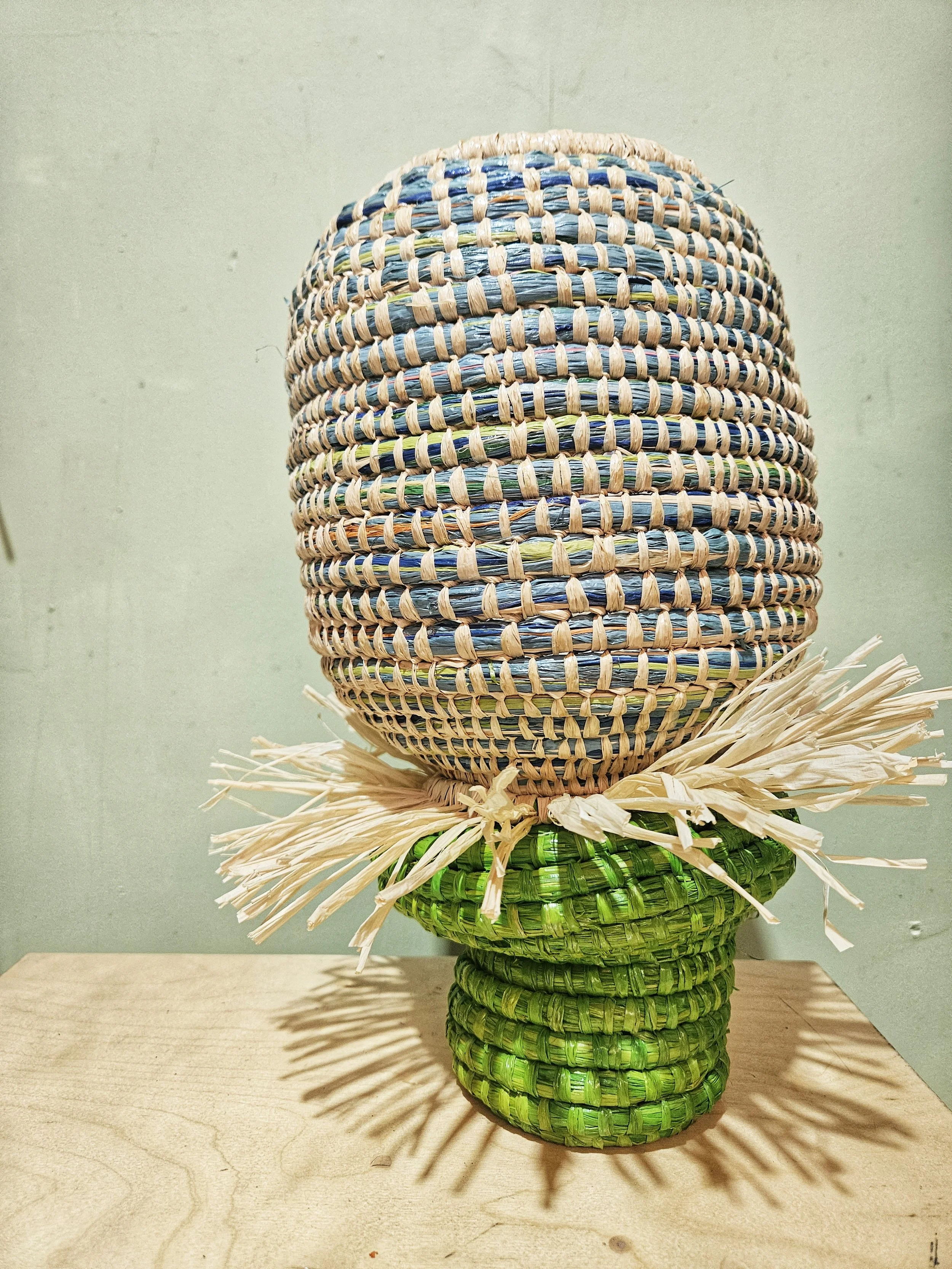
I’m currently exploring increasingly sculptural forms and playing with the boundaries of what a basket can be. I’m interested in how far I can push a basket before it stops being a basket and becomes something else entirely.
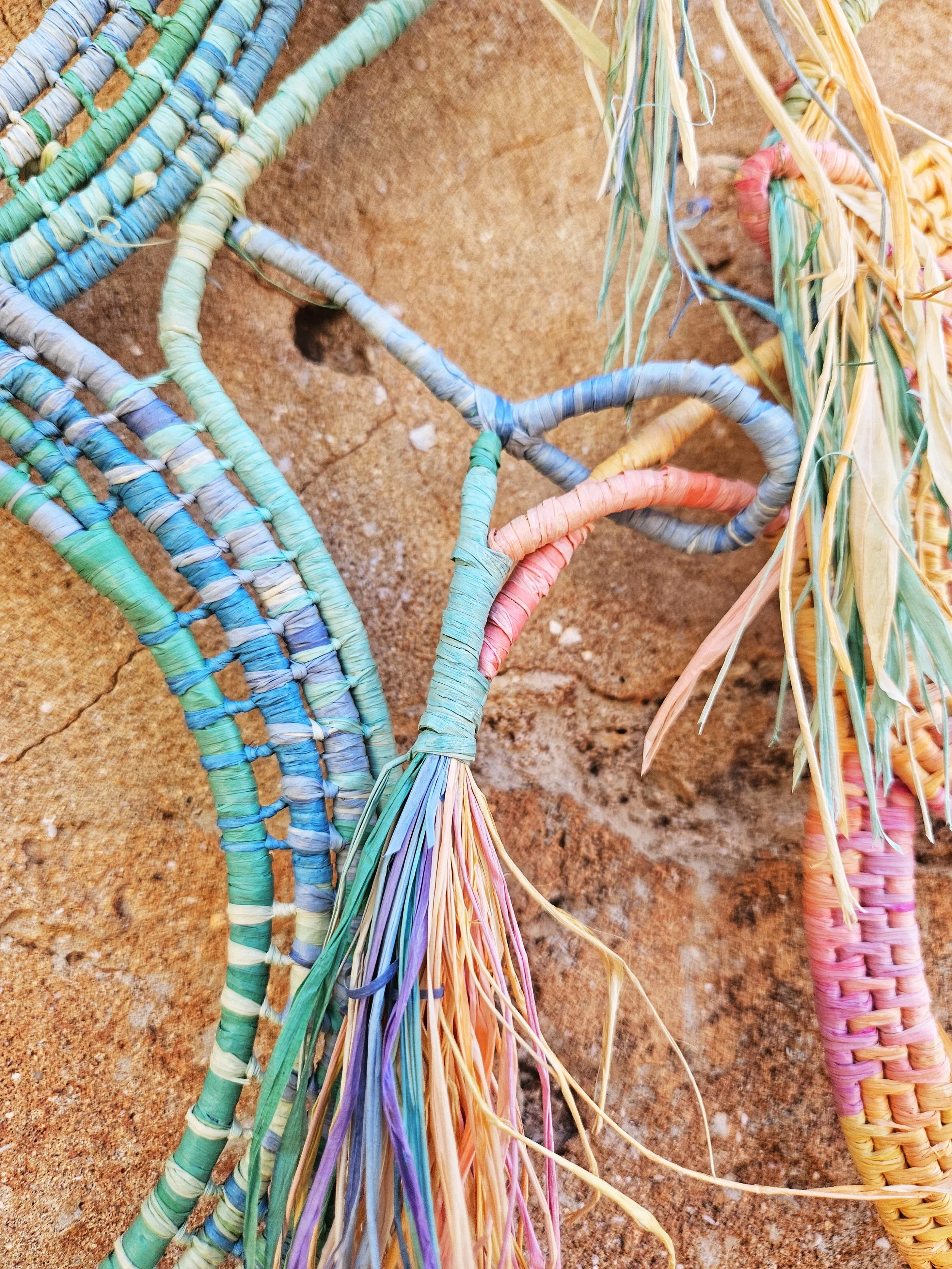
I work with a mix of raffia, rattan reed, cane, paper, and various threads. Basketry traditionally has a strong emphasis on function and a natural aesthetic, and my work challenges those conventions. I love bright, almost obnoxious colours, and playing with form, shape and texture to make vessels that feel strange and surprising.
You also teach others how to weave - is there anything you find super challenging about communicating your process to “newbies”?
Most people pick it up incredibly quickly! It’s a repeated rhythm,and once your hands get the hang of it, they just seem to know what to do. Every culture has a tradition of weaving, and I believe it’s something that’s in our DNA. People will say to me, “I feel like I’ve been doing this forever,” and I completely understand what they mean.
The trickier part is managing people’s perfectionism. We’re often our own harshest critics, and it can be hard to convince someone that any little inconsistencies and imperfections are actually part of what makes handmade work beautiful. I encourage people to (at least try to) let go of the idea that their basket needs to be perfect, and instead notice the unique character that comes from making something slowly, by hand - even if it is a bit wonky!
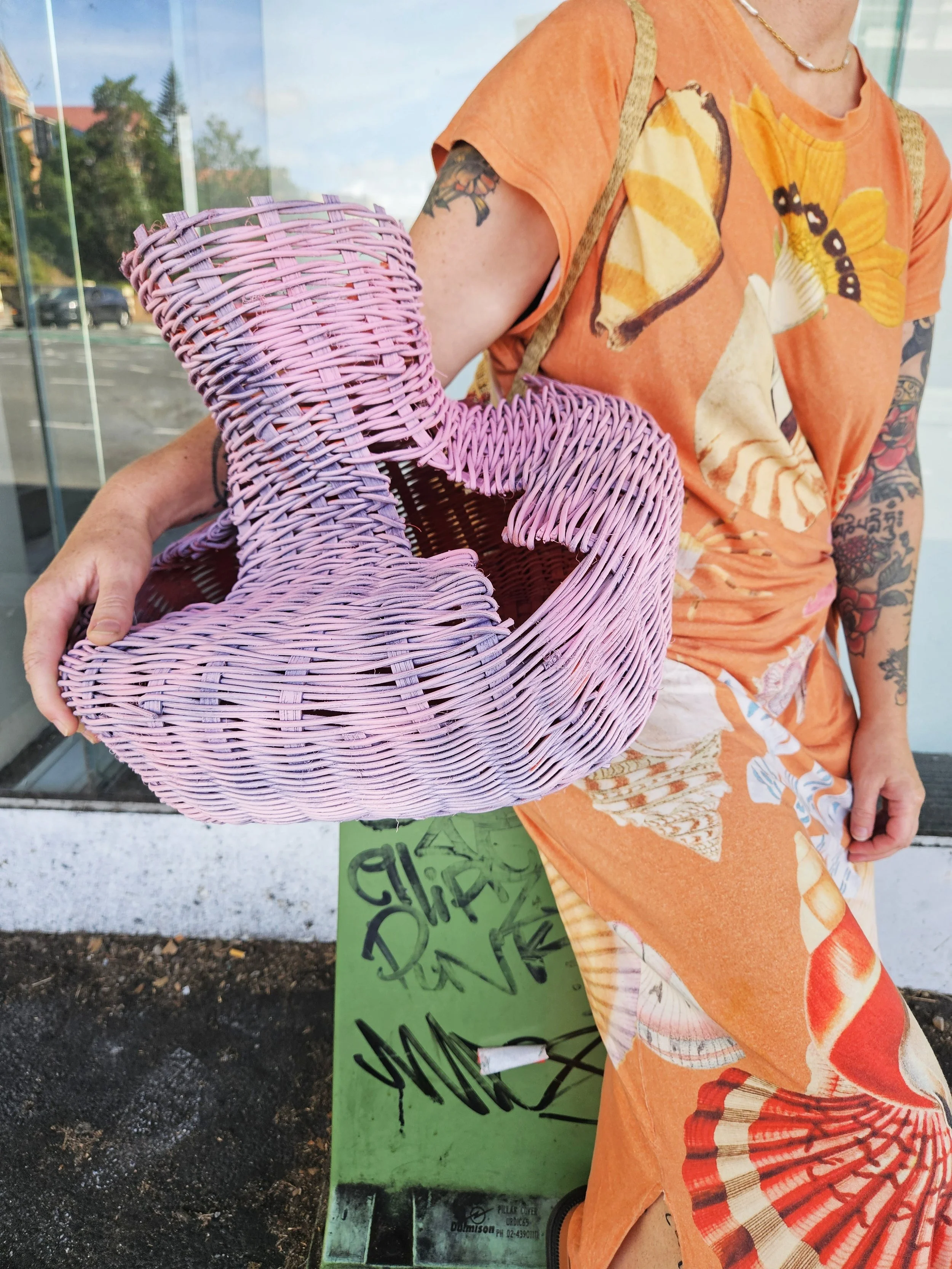
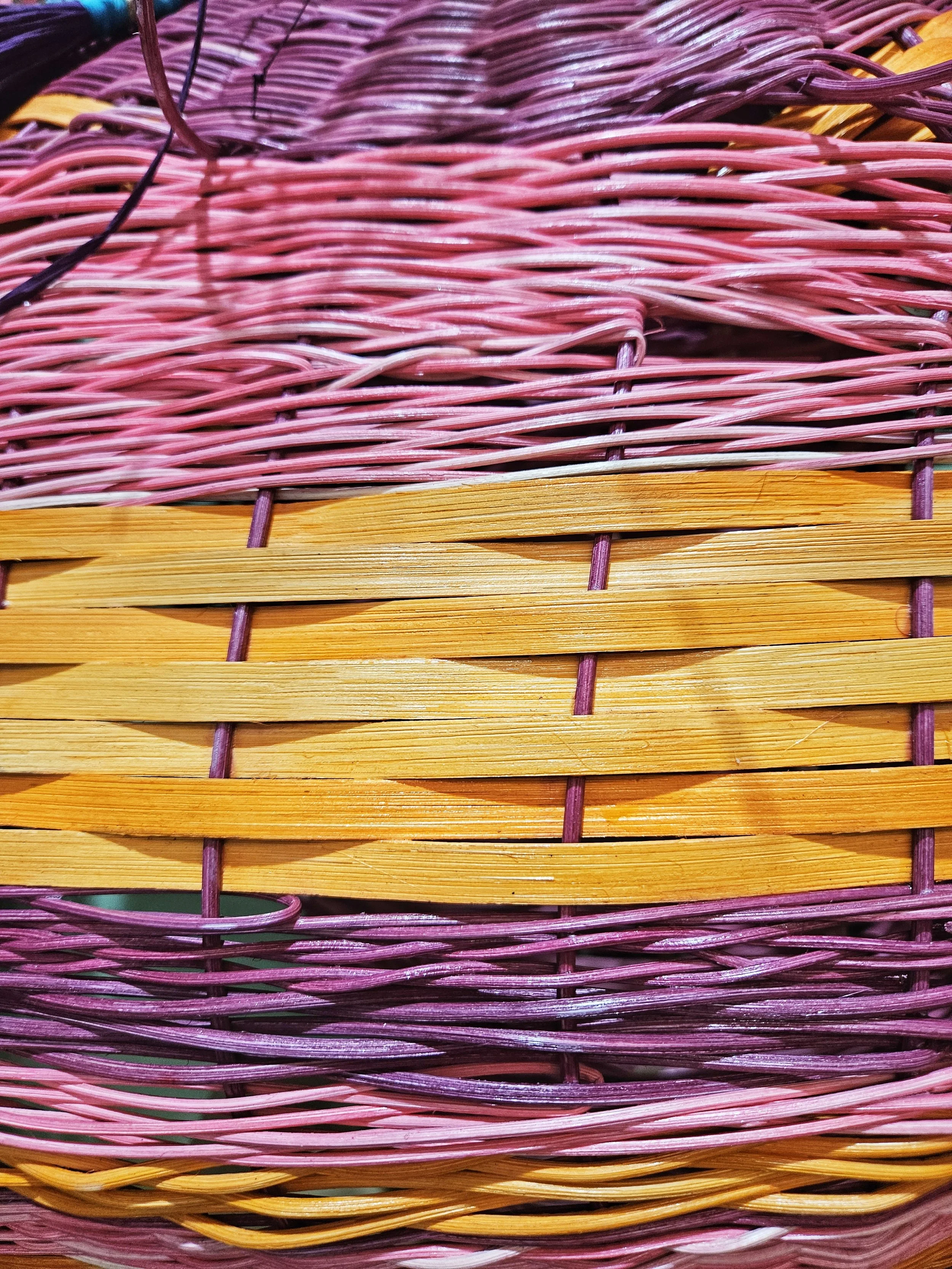
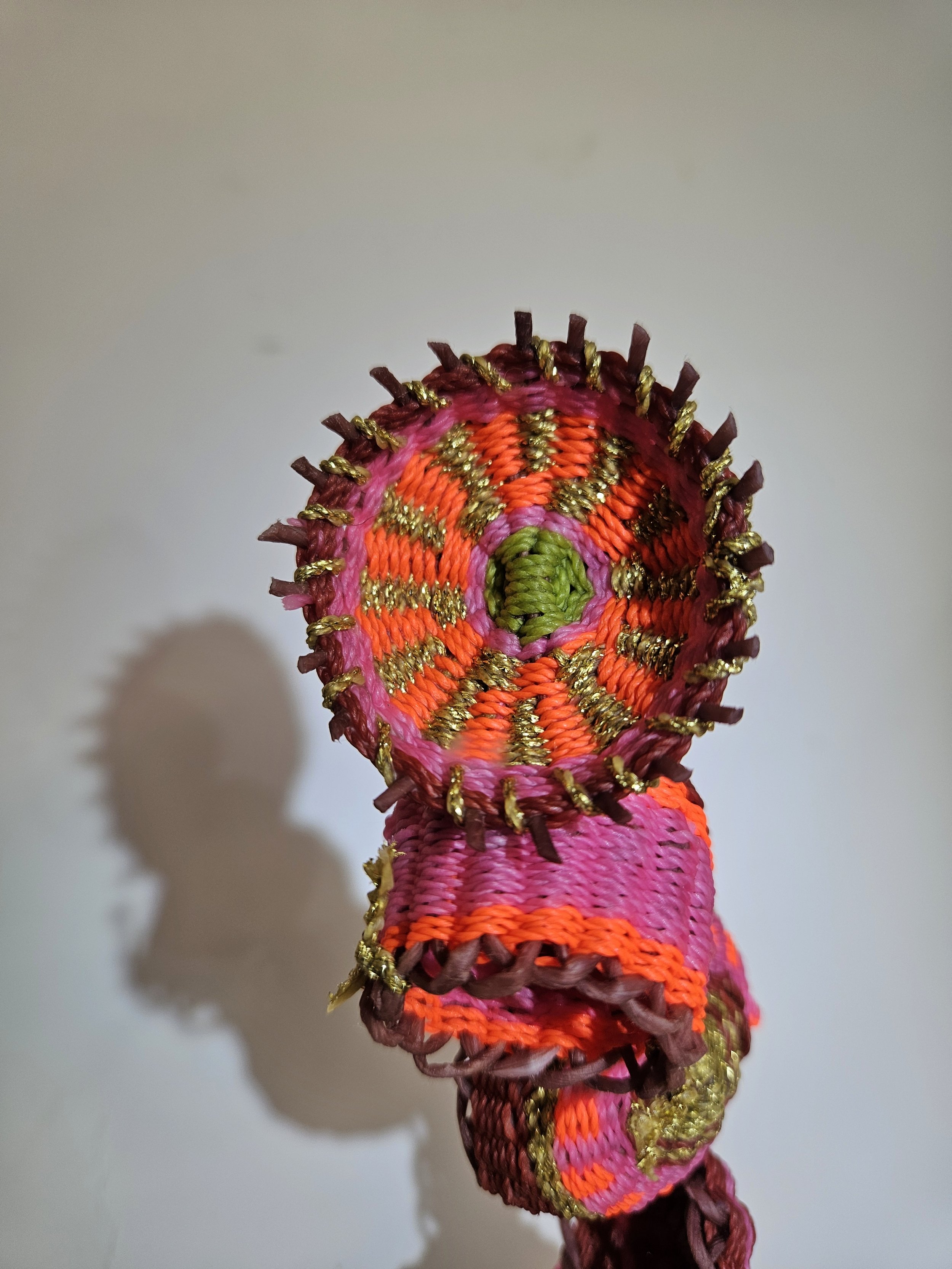

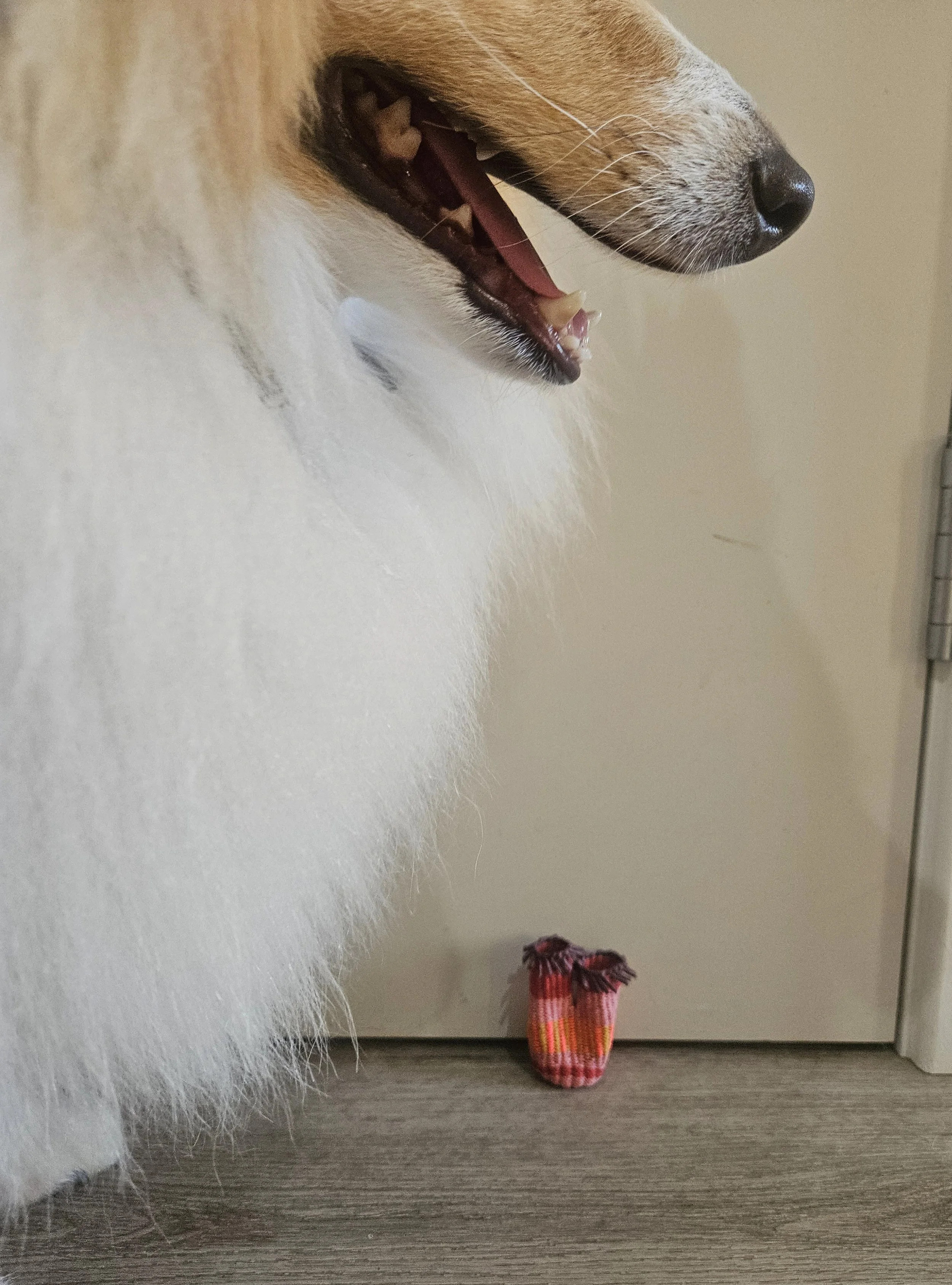
I really love how your pieces range from large vessels to teeny tiny ones. Do you find smaller ones to be more challenging due to its intricacy? And do you vary in scale for specific purposes, or do you just create whatever you’re feeling at the time?
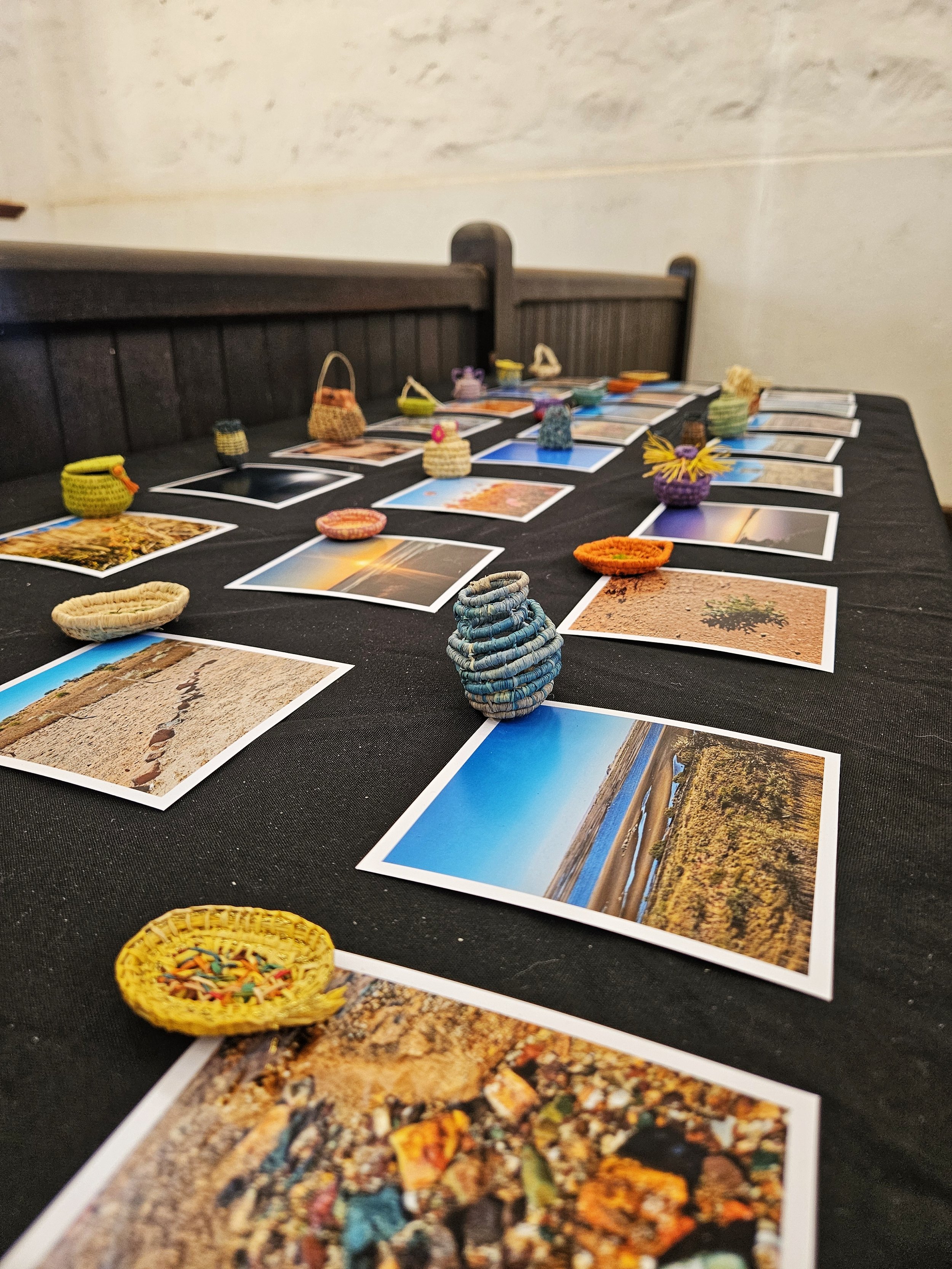
I started making tiny vessels almost by accident. During a 30-day residency in the Pilbara, I wanted to weave a different basket every day, reflecting something I’d noticed in the landscape. Weaving is such a slow process, and I was very busy, so the only way I could manage it was to make them very small! I fell in love with the scale. Added bonus: the dopamine hit of finishing a piece comes a lot sooner when they’re tiny!
They are definitely more challenging — particularly when you have fat, clumsy fingers like mine! I tend to make them when my shoulders are getting sore from working on larger pieces (weaving is surprisingly physical!), or when I’m travelling, because they’re much easier to take with me.
Tiny work invites you to slow down and look closer, to really notice the details. I also work in nature connection, so that idea of paying attention and cultivating a sense of awe feels very connected to my practice. At the moment, I’m exploring what happens when I bring the tiny vessels together with much larger ones — playing with that contrast in scale and seeing how the two connect.
Tell us about how ecological impact affects your art: how important is it to you to use natural or recycled materials?
This is definitely something I think about, although it’s not a primary driver of my work in the way it is for some other weavers, who only use what they can grow or forage themselves. I do my best to source ethical and sustainable materials. I believe plant fibres carry memory of where they have been; an unhappy fibre is no fun to weave with! It feels important to support First Nations businesses who supply materials like raffia.
I also use plenty of synthetic materials, and I’m really interested in the tension between natural and manmade elements. I love going to Reverse Garbage and seeing what strange materials might spark an idea. I currently have some old industrial lampshades sitting in my studio waiting to be transformed.
Finally: we would love to know what inspires you, whether that's other weavers/artists or things you see in the world around you.
Honestly, everything! Nature is a huge influence — I’m constantly noticing colours, textures, shapes and patterns in the world around me. Music, too - there’s one basket that’s inspired by a Linkin Park song I was obsessed with as an emo teenager.
Magandjin has a wonderful creative scene, and I’m very lucky to work alongside a gang of incredible artists at Merivale Studios. The cross-pollination of ideas that happens in a shared space is so wonderful (for example, I started spray painting baskets via chats with Luke from Artillery Worldwide!) The crew at Vacant Assembly also inspire me constantly and continue to help me grow my confidence,
Other weavers are a huge source of inspiration too, particularly Dee Clements, Sonja Carmichael, Anne Coddington, Bernie Harada, and Mary Crabb (a generous teacher whose online twining courses I highly recommend). I also love scrolling Insta for random new finds - that algorithm knows me well and delivers!
You can check out Monique’s work here on her portfolio, or on her IG page here!
