

Artist chats: GUS EAGLETON
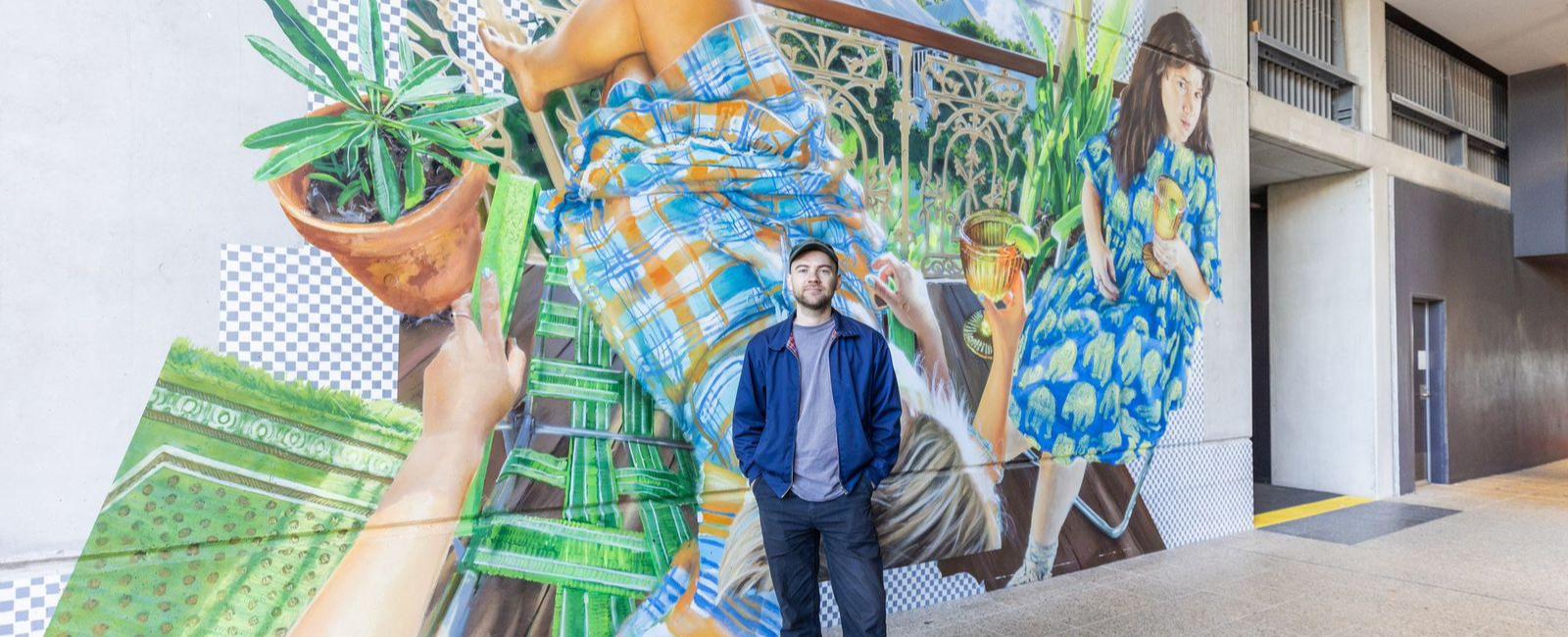
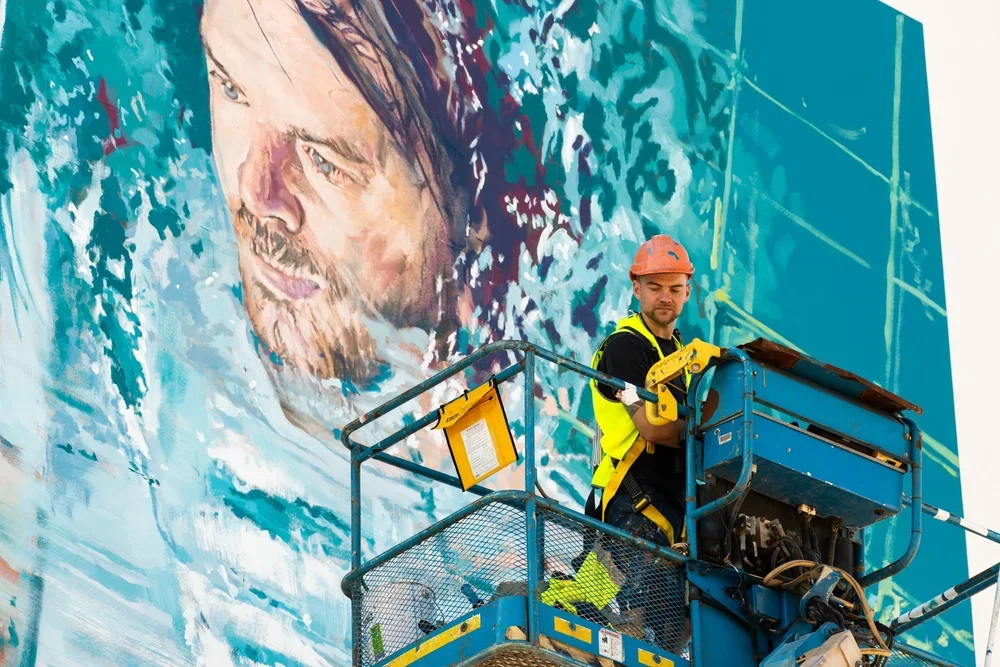
Gus with his mural at the Brisbane Airport domestic terminal!
Hey Gus! Give us a little rundown on your practice.
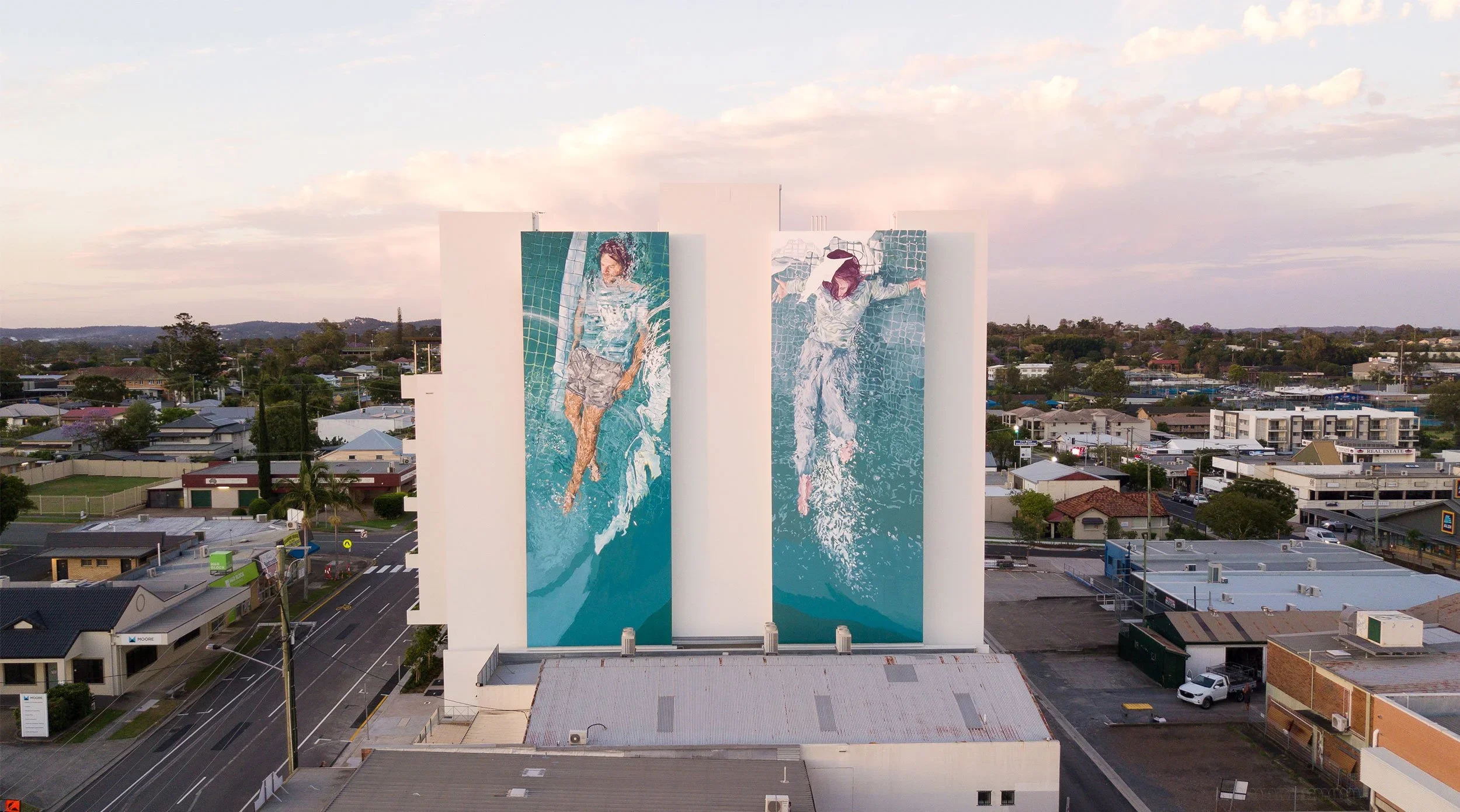
Hi guys! For the past decade, I’ve mainly focused on painting walls and working at a large scale, although I’d like to make more time for exhibition work. My work is grounded in figuration and revolves around people, places and narratives.
I’m drawn to ideas that mean something to me and feel relatable, and if I can throw in a laugh or smile, that's a bonus too. I want the work to make an impression or leave room for viewers to create their own narratives. I really enjoy the challenges of painting at scale. Some of my biggest walls have been around 30–35 metres tall, while other pieces have stretched up to 200 metres in length, working with other artists.
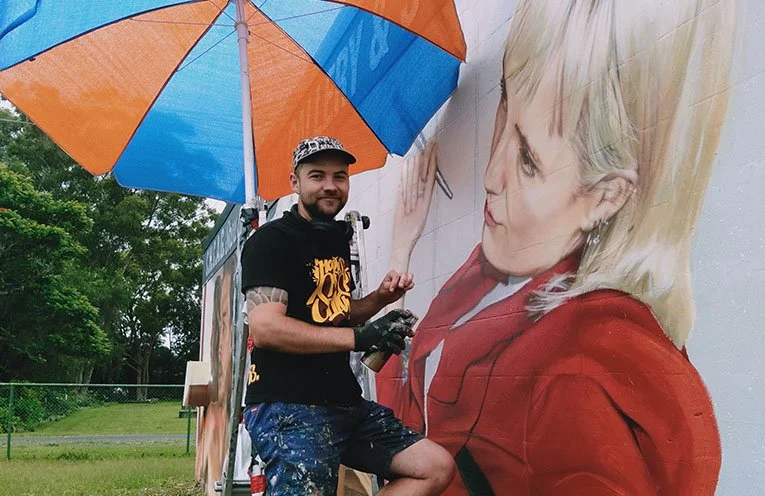
I’ve painted on all sorts of surfaces across Australia and overseas. My approach combines traditional painting techniques with a more contemporary toolkit: brushes and exterior paints alongside aerosol, spray guns and methods borrowed from house painting. It’s about finding the right combination to create a large-scale piece that looks great and lasts a long time.
You are very much known for your large scale pieces, many of which are on big ol buildings across the world. What do you find most challenging about working at such a scale?
For me, particularly in Australia, one of the hardest parts happens before you even get to the wall. Sometimes you have to apply for projects and then win them amongst other talented artists. Or if you're lucky enough to avoid that whole process, clients want to work with you in particular. You’re often working with several organisations, stakeholders and councils, and getting a design approved by everyone can be challenging.
Art is subjective, and every stakeholder might have their own opinions and objectives. Australian public art is frequently expected to meet a whole range of objectives beyond the artwork itself. It might need to reflect an Australian identity, represent cultural and gender diversity, satisfy different community groups and avoid being too political or challenging. Balancing those expectations while still making something genuine and true to your own work can be difficult. Once you’re painting, the challenges become more practical. You’ve got a fixed budget for lifts, materials and assistants, and then you have to work around the weather. A week of rain can push everything back and add a lot to the cost. On construction sites, you’re also fitting around other trades and deadlines for the wider build.
There’s often a lot of emphasis on what the artwork will contribute to a building or business, but the artist can still end up last in line for scheduling and support. That mismatch can be frustrating: the artwork is treated as important, while compensation and working conditions can make the process harder than it needs to be and aren't the best environment for fostering the best work an artist can produce.
Travelling around the world to make murals is something you’ve been doing for a while.
Do you have a favourite place you’ve painted in - and are there any stark differences in how street and public art is approached from country-to-country? How do you think Brisbane differs or stands out here?
The places I enjoy most are the ones that embrace art for art’s sake. People are happy that you’re there, putting time, energy and creativity into their community, and they give you the freedom to paint something you believe in. Of course, it helps when people connect with the finished work, but the appreciation starts with the act of making it.
I love working somewhere that values ideas, aesthetics and the development of an artist’s practice, without needing the mural to serve another purpose, like box-ticking or pleasing everybody. I’ve had some great experiences like that on my more recent travels. You arrive, you’re paid well and looked after, and there’s no lengthy design approval process. They trust you to paint, and everyone is stoked that you’re there doing it. There’s a real appreciation for art as part of everyday life and public space. I’d love to see more of that trust and openness in Brisbane. Giving artists more room to follow their own ideas could make a huge difference to the work we see here.
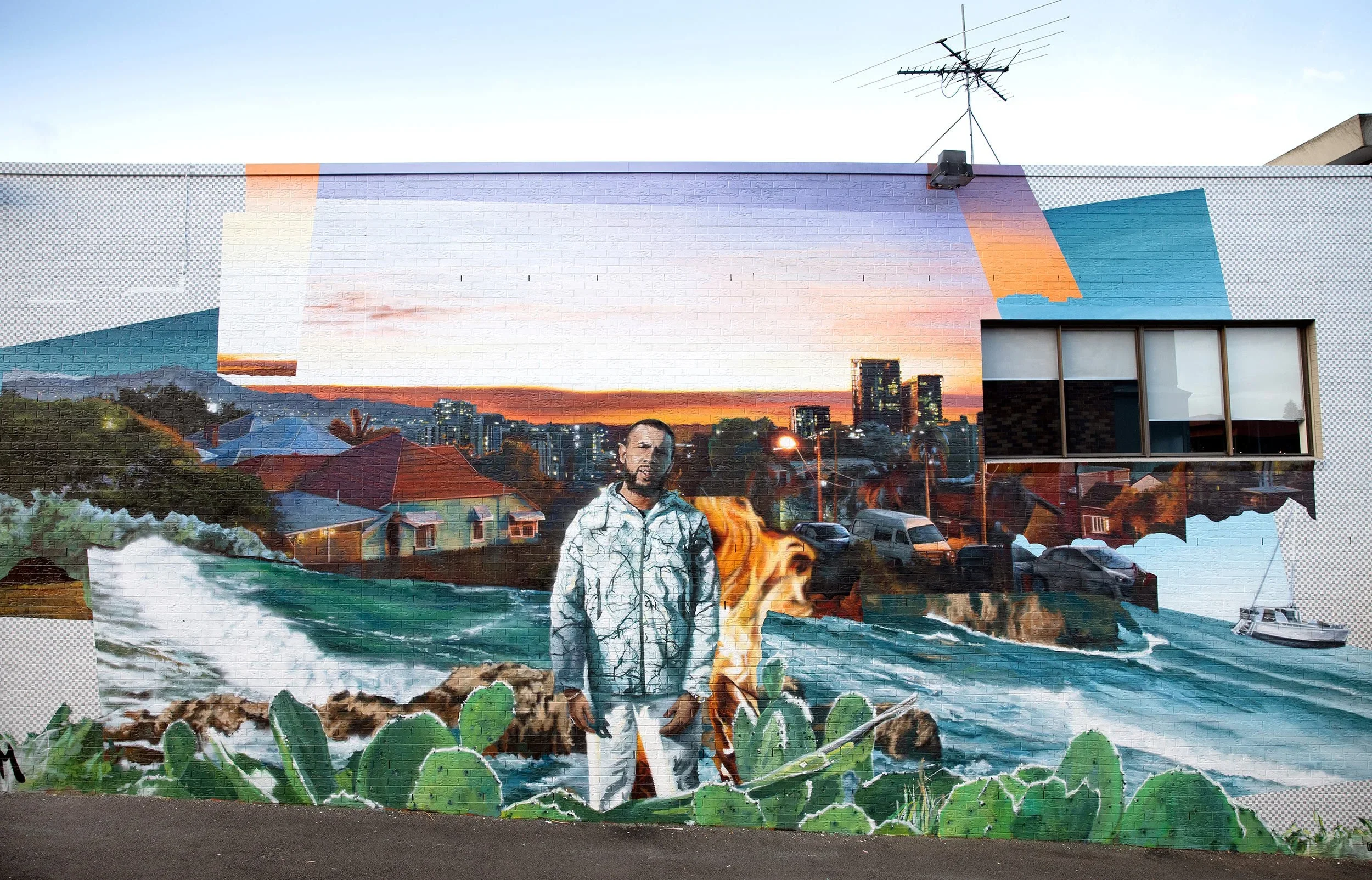
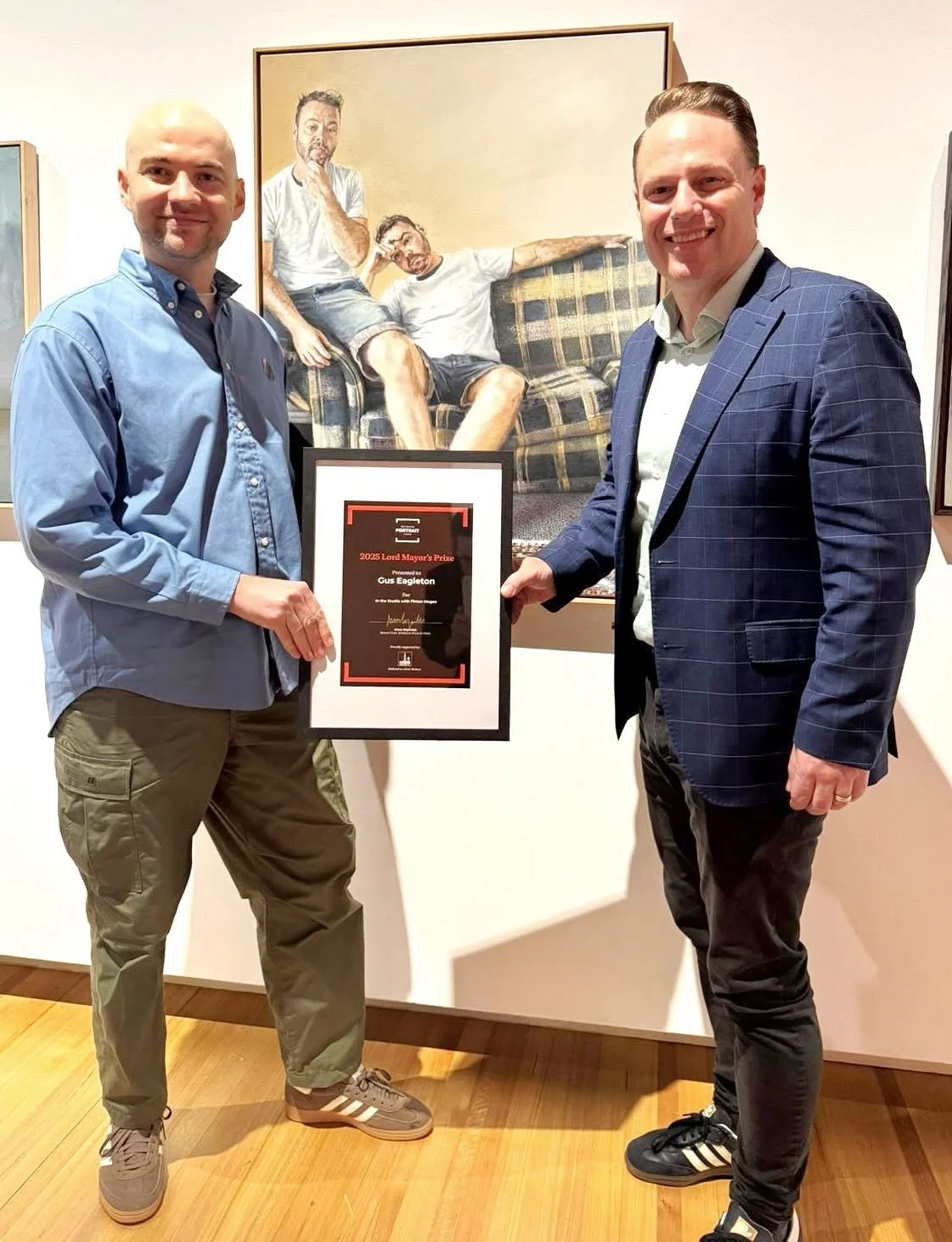
You won the Brisbane Portrait Prize last year, painting a fellow Merivale resident Fintan Magee, hell yeah! How did you find that process?
The Brisbane Portrait Prize was a great experience, both for me personally and for the street art and graffiti communities that have consistently produced work in Brisbane. Winning with a portrait of my friend and fellow street artist Fintan Magee felt like another step towards recognising those cultures in Brisbane. After working in Brisbane since 2009, it was lovely to be recognised as a Brisbane artist and to feel that appreciation and validation.
Most of my work these days is on walls; I think that piece was the only canvas I’d painted in a couple of years. Lately, though, my focus has been on travelling, painting walls, and finding opportunities that let me push the work as far as I can. Finishing the portrait on time was tricky because I chipped away at it between mural projects. I felt it was the right year to enter, so I really pushed to finish it in time. The prize attracts a high calibre of work, and it was in its seventh year and becoming increasingly well known. There were around 600 entries, I believe, with 60 artists shortlisted for the exhibition.
To win among that group was a real honour. I feel very lucky to have had the work selected and appreciated in that way.
Finally, are you fussy when it comes to painting materials? Tell us about your favourite things to use in your work!
I’m a little fussy about paint because I want the work to look its best and last. I try to avoid poor-quality materials or anything that will fade quickly. In Australia, I like using Resene Lumbersider exterior paints; I’ve found the pigments great, and the paint holds up well in the sun. When the budget allows, I’m also a fan of higher-end aerosols like Montana Gold and Molotow. That said, I’ve used plenty of brands and experimented with all sorts of materials, so I’m happy to adapt to what’s available.
I’m less fussy about brushes. Monarch brushes from Bunnings do the job for me; I don’t need anything too fancy. For aerosol work, I mostly use three different caps, with the occasional specialty cap when I need it. I also use spray guns, from the relatively inexpensive Wagner air sprayers you can get at Bunnings to a larger airless sprayer for covering bigger areas.
As for lifts, I just want enough room to work and a machine that moves freely and reliably. Being able to drive it around and go up and down without constantly stabilising it or putting blocks underneath makes a huge difference. When a machine keeps cutting out or having issues, it can really slow the painting down. A lift that simply does what it’s meant to do makes the whole experience much more enjoyable.
You can check out Gus’ work here on his website, or on his IG page here!
